
How to Validate Your Partner During Hard Conversations
You don’t fight because you’re bad communicators.
You fight because at some point in the conversation, one of you stops feeling seen.
Instead of really hearing what your partner is saying, your mind jumps to old stories and worst-case interpretations. You defend. You push back. You withdraw. And the harder you try to be understood, the more stuck and disconnected the conversation becomes.
When that happens, your nervous system goes on alert.
Your heart speeds up.
Your mind starts protecting.
And the real conversation disappears.
Validation is how couples find their way back.
Not by agreeing.
Not by fixing.
But by helping your partner feel emotionally received.
And it only takes two simple listening skills.
The Real Problem Isn’t the Topic — It’s Feeling Unheard
Most couples think they’re arguing about:
• Chores
• Money
• Schedules
• Parenting
• Tone
But underneath every repeating fight is the same pain:
“You don’t get me.”
“I don’t matter to you.”
When someone feels misunderstood, their brain shifts into protection mode.
Listening drops. Empathy fades.
Winning starts to matter more than connecting.
That’s why even loving couples can feel so far apart.
The Two Listening Skills That Create Validation
When emotions are high, don’t rush to defend or fix.
Start with emotional connection.
1. Summarize what you heard
2. Empathize with how it felt
This two-step move interrupts negative cycles and brings emotional safety back into the conversation.
Skill 1 — Summarize
This is how you show you truly heard your partner.
Repeat back what they said in your own words — without adding your story.
Examples:
“I hear that you were counting on me.”
“I hear that this really mattered to you.”
“I hear that you needed more support.”
This tells your partner: “You exist in my mind.”
It also slows your own reactivity and keeps the moment grounded.
Skill 2 — Empathize
This is how you show you understand how it felt.
Name the emotion you see.
Examples:
“I can see how that would feel lonely.”
“I can see why that hurt.”
“I can see how frustrating that was.”
This tells your partner: “You exist in my heart.”
You don’t have to agree to be deeply connected.
➜ 🖨️ PDF: When emotions run high, the right words help. Download the free Summarize & Empathize Scripts with immediate access and no sign-up.
Stop the Disconnection Spiral with a Validating Response
❝ Reflecting is like putting your brain in neutral. ❞
Because we think almost ten times faster than we listen, our reactions often rush in before understanding has a chance. Worries, defenses, and old stories can drown out what our partner is actually trying to say.
A validating response slows everything down.
When you summarize and empathize, you quiet the inner noise long enough to truly receive your partner’s experience — and that’s what brings you back to each other.
Validating Feelings Without Agreeing or Giving In
Many people hesitate to validate their partner’s perspective because they think it means saying, “You’re right and I’m wrong.”
That’s not what validation means.
Validation means: “You are not alone. I see you.”
It means you’re willing to step into your partner’s inner world — their history, their sensitivities, their stress, their hopes — and let them know you’re with them in it.
You’re not saying the facts are correct.
You’re saying the experience is real.
You can disagree with the facts and still validate the feelings. In healthy romantic relationships, emotional safety matters more than being correct.
That’s why validation works.
It restores the sense of togetherness — even in conflict.
Understanding Is the Antidote to Conflict
When someone feels heard and emotionally understood:
• Their nervous system calms
• Defensiveness drops
• Openness returns
• Real communication becomes possible
This two-step process — summarizing and empathizing — calms the nervous system and bridges emotional distance. Before problems can be solved, partners need to feel seen.
Communicate Like You’re Playing Catch with Active Listening
Use one simple rule:
One person talks.
The other only summarizes and empathizes.
No explaining.
No correcting.
No problem-solving.
Take turns being:
• The Speaker
• The Listener
The Listener’s job is to help their partner feel: “You see me. You get me. I’m not alone.”
That’s how validation becomes a habit, instead of reacting defensively.
That sense of emotional safety is the foundation of secure attachment and lasting intimacy. When couples feel SEEN, even difficult conversations become opportunities to strengthen the relationship.
Better Listening Is the Key to a Secure Connection
Healthy communication doesn’t start with being right — it starts with being heard.
Relationship research shows that the first three minutes of a conversation predict how the rest of it will go with over 90% accuracy. When you lead with defensiveness, your partner’s body braces. When you lead with validation, their heart opens.
You don’t have to untangle every trigger or solve every problem to reconnect.
You just have to help your partner feel validated.
When your heart starts racing and your mind wants to react, take a breath.
Summarize what you heard.
Empathize with how it felt.
You don’t reconnect by winning arguments.
You grow closer by helping each other feel SEEN.
Keep connecting,
Debbie Cherry, LMFT
READY TO FEEL UNDERSTOOD AGAIN?
💝 Grab the free Connected Communication Toolkit to communicate effectively with a proven method 1,000s of couples have used successfully.
📅 Book an appointment for a free consultation or a session to speed up your learning curve and get back to connection quickly.
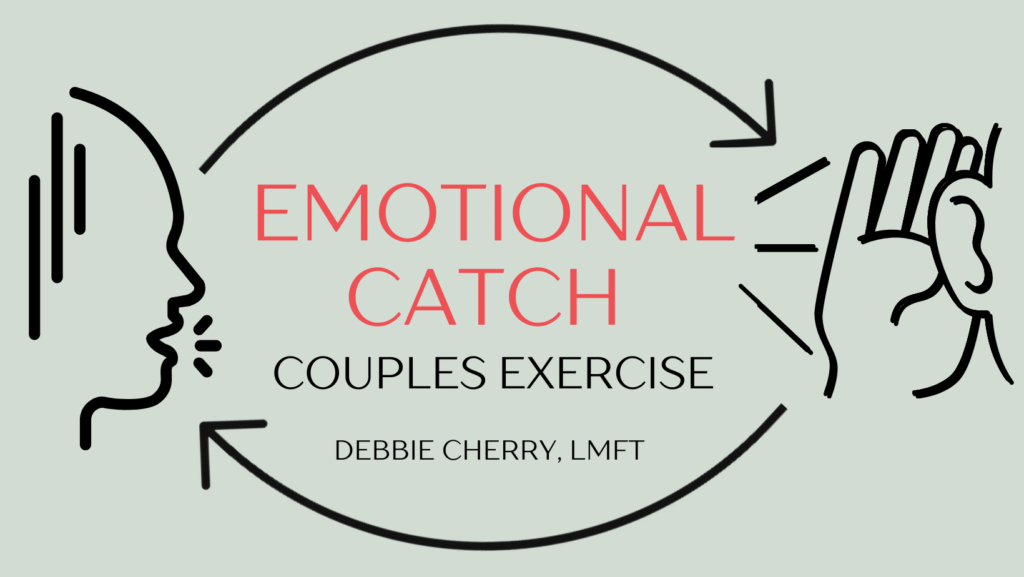
Next Step ➡️ Be Understood with The Emotional Catch Couples Communication Exercise
💬 FAQs About Validation and Better Listening Skills
Why doesn’t my partner listen when I talk?
When someone doesn’t feel heard, it’s often about what’s happening in the body, not just the words. Your partner’s body language, facial expressions, and eye contact may show they are not fully receiving what you are saying, even if they are physically present.
Most people are busy protecting their own feelings when they feel upset, angry, or frustrated, so instead of truly paying attention, they are preparing how to respond, give advice, or defend their point. This has the opposite effect of making you feel understood.
When you summarize what you hear and validate someone’s feelings, you show genuine interest in this person’s perspective and offer real emotional support. Research suggests this has a profound effect on connection and creates a sense of shared experience.
Why do small things turn into big fights?
Small moments can activate deep-seated fears about not being important or safe in a relationship. One person may feel hurt while the other feels frustrated, and suddenly emotions take over before anyone can make sense of what’s happening.
Demonstrating empathy and slowing down to understand this person’s feelings helps calm fear. Even when you feel differently, offering support instead of reacting creates a meaningful difference in how the conflict unfolds. Validation shows that you want to speak in a way that respects the relationship and your partner on the receiving end of the conversation.
Why do I feel like my partner doesn’t understand me?
Feeling misunderstood usually means your own feelings haven’t been emotionally recognized. When your partner doesn’t acknowledge your words or sounds, it can seem like your experience doesn’t make sense to them.
Validation creates better understanding of another person by focusing on this person’s emotions, not just the point being argued. Learning this ability — whether through couples therapy, marriage counseling, or relationship coaching — helps couples realize that connection comes from emotional presence, not being right.
📚 Research-Backed Resources on Validation & Communication
PACT (Psychobiological Approach to Couple Therapy) explains how conflict triggers the brain’s fight-or-flight response when partners feel emotionally alone. The Summarize step in SEEN works the same way PACT does — it calms the nervous system by showing your partner they are mentally and emotionally received, making empathy and connection possible again.
Empathic listening improves emotional connection in relationships.
Research shows that when partners engage in receptive, empathic listening — not just hearing words but tuning into emotion — the other person’s emotional response to stress and negative events improves. This directly supports the Empathize step of SEEN: demonstrating empathy helps calm the nervous system and reinforces secure attachment by acknowledging and validating your partner’s experience.
Gottman research on the “first three minutes” of conversations: A longitudinal study of newlywed couples found that the way a discussion began — even just the first three minutes — predicted long-term marital outcomes over six years. This supports the idea that how you start difficult conversations (e.g., with validation instead of defensiveness) shapes not just that talk but the health of your relationship.
NEXT STEP ➡️ Be Understood with The Emotional Catch Couples Communication Exercise