
Why Relationship Arguments Escalate So Quickly
Do you ever find yourself in an argument with your partner and think, “How did we even get here?”
You start with good intentions.
You tell yourself to stay calm.
To be kind.
To not go there again.
And then somehow… you’re both right back in it.
Voices sharper. Defenses higher. Saying things you do not mean. Feeling miles apart even though you are standing in the same room.
Sometimes it escalates so fast you cannot even remember what started it.
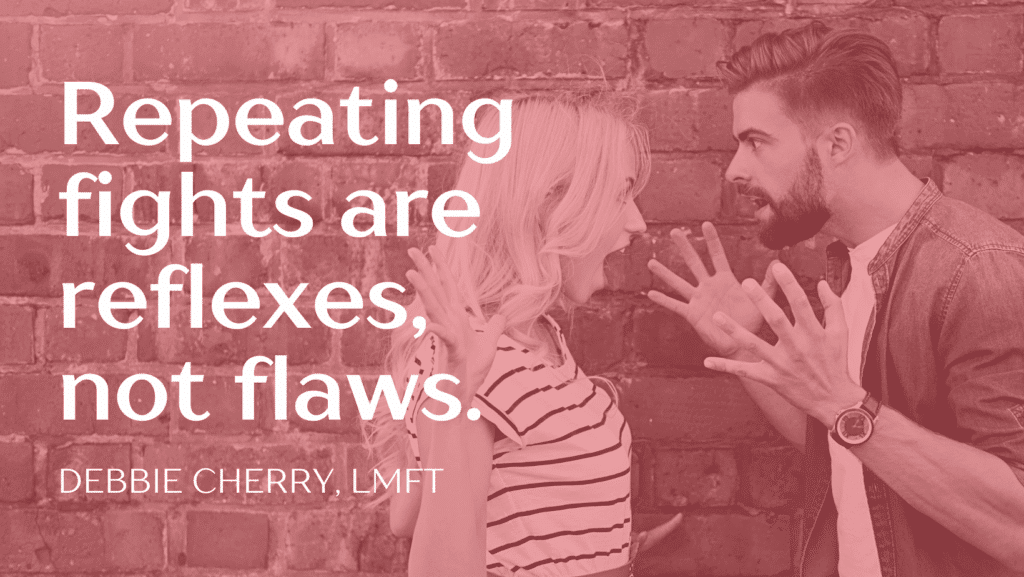
Recurring conflict is not a relationship flaw.
Relationship fights are a nervous system reflex.
Understanding and calming these reactive patterns can help couples stop relationship fights, improve communication during conflict, and reconnect more quickly.
What Getting Triggered in a Romantic Relationship Really Means
When a situation echoes past emotional experiences held deep in the brain, your nervous system shifts into protection mode before conscious thought has a chance to step in.
So when disconnection hits, your internal alarm system fires.
Not gently.
More like a fire alarm being pulled.
Your brain flips into survival mode and starts running on a completely different operating system. The thoughtful, nuanced, compassionate parts go offline. The fast, reactive, black and white parts take over.
This mode is designed for emergencies, not intimacy.
It prioritizes self protection over connection. Certainty over curiosity. Winning over understanding.
And once you are in it, you literally cannot be the partner you want to be.
Empathy drops.
Listening narrows.
Compassion shuts down.
You are not thinking clearly. You are reacting instinctively.
That is why logic does not work in heated moments of relationship conflict. That is why trying to prove your point makes things worse. And that is why the same fights repeat on loop.
Nothing changes until you calm the survival system running underneath it all.
The 3 Cognitive Shortcuts That Fuel Reactive Patterns
These mental shortcuts exist all the time. But when you are in survival mode, they go into hyperdrive and keep you stuck in couples conflict.
1. Negativity Bias – focusing on what feels wrong while filtering out what is working
Your brain is wired to scan for potential threats first.
When you feel hurt or disconnected, your mind zooms in on the negative and overlooks the neutral and positive. Good moments fade into the background while small problems feel urgent and important.
A neutral tone sounds irritated. A small mistake feels bigger than it is. The mind highlights risk and minimizes reassurance.
Example:
They come home late and forget to text.
Your survival brain says, “They do not care. I am not important.”
The brain would rather assume danger than risk vulnerability. It is trying to protect you — but it narrows your perspective and distorts reality in the process.
2. Confirmation Bias – collecting evidence to support the story your brain already believes
Once your mind forms a painful story, it starts looking for proof.
You stop seeing the full picture and begin noticing only what supports the narrative. Moments that contradict the story fade from awareness, while anything that fits it feels significant.
Example:
They seem distracted during a conversation.
Your brain says, “See? They never listen. This always happens.”
You forget the times they were attentive. Your mind builds a case, not connection.
3. Attribution Bias – assuming your partner’s behavior reflects who they are rather than what they are going through
This one is especially damaging in relationships and makes healthy conflict resolution harder.
You explain your own behavior based on circumstances, but you judge your partner’s behavior as a reflection of their character.
When you mess up, you explain it:
“I was exhausted.”
“I had a stressful day.”
“I did not mean it like that.”
But when your partner messes up, your brain blames their character:
“They are lazy.”
“They are selfish.”
“They are inconsiderate.”
Same behavior. Different story.
This bias quietly turns misunderstandings into personal attacks.
The Fastest Way to Get Back on the Same Team
You do not have to memorize psychology terms in the middle of a fight.
You just need two simple steps from the PAIR framework that counteract survival mode immediately and support emotional regulation in relationships.
Step 1: Pause and Be Present
The moment you notice tightness in your chest, heat in your face, or sarcasm creeping in, pause.
Those are early warning signals that your survival brain is taking over.
Presence is powerful because when your mind is not anchored in the present, nearly half of your thoughts drift negative. You replay old hurts. You gather evidence from the past. You predict a painful future.
Presence cuts that loop.
You cannot stack old grievances.
You cannot build a mental case.
You cannot time travel to past fights.
You can only deal with what is happening right now.
That simple practice gives your nervous system space to settle and improves communication during conflict by bringing your thinking brain back online.
Step 2: Assume the Best
This step directly counterbalances your brain’s threat filter.
Instead of defaulting to worst case interpretations, you intentionally lean the other way.
Like counterbalancing on a sharp turn, you compensate for your brain’s negative tilt.
Instead of:
“They are lazy.”
Try: “Maybe they are overwhelmed.”
Instead of:
“They do not care.”
Try: “Maybe they are distracted or stressed.”
Instead of:
“They are disrespecting me.”
Try: “Maybe we are misunderstanding each other.”
Assuming the best does not mean ignoring problems. It means refusing to let survival mode define your partner’s character.
This softens your tone. Your body relaxes. Your partner feels safer. And safety is what allows repair and helps couples reconnect after a fight.
✅ Stop conflict spirals sooner. Download the free Conflict Spiral Interrupter for quick, in-the-moment support.
Signs You’re Triggered During Relationship Conflict
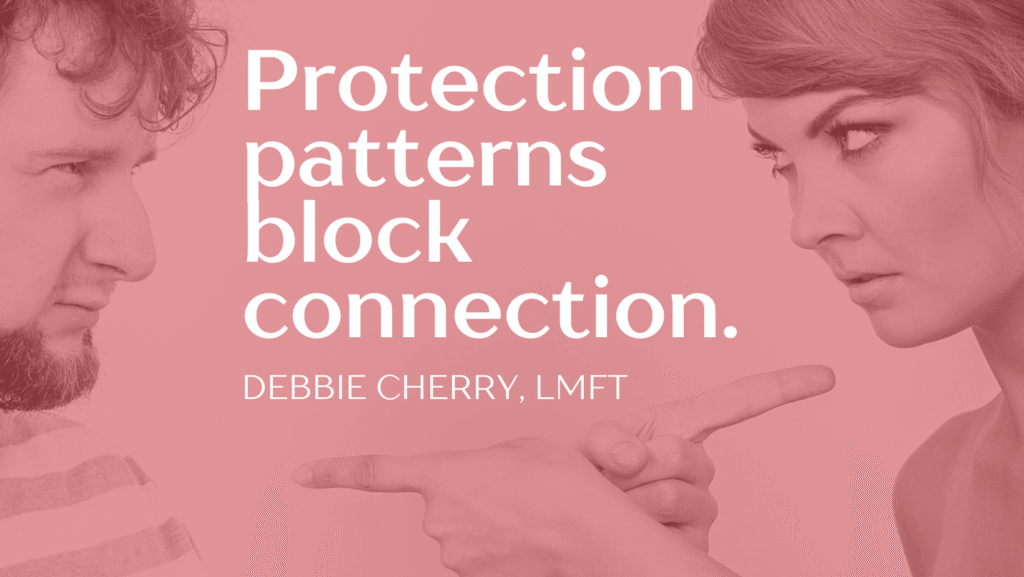
You will feel the trigger before you think it.
Tight chest.
Clenched jaw.
Eye rolling.
Contempt.
Sarcasm.
These are cues that your alarm system is activating.
That is your moment.
Pause.
Be present.
Assume the best.
Those two steps calm the fight-or-flight response so you can return to being thoughtful, caring, collaborative — and better able to practice healthy conflict resolution.
Pause Early Before Survival Mode Hijacks Your Relationship
When negativity floods an interaction, the relationship quickly feels unsafe and adversarial.
The goal is not to be perfect. The goal is to repair quickly so negativity does not pile up and create ongoing relationship conflict.
Relationship researcher John Gottman found that thriving couples maintain about five positive interactions for every negative one, even during conflict.
That is why the PAIR tool for conflict resolution works best when used fast.
Do not wait until the argument spirals.
Do not focus on who is right.
Do not try to win with logic.
Regulate first. Repair sooner. Reconnect faster.
Time-Outs Regulate the Nervous System in Healthy Relationships
Sometimes calming reactive patterns means taking a brief, intentional pause so your nervous system can settle. This is not avoidance — it is a protective break that prevents escalation and protects the relationship from hurtful reactions.
A healthy pause is structured, communicated, and temporary.
Couples benefit from clearly saying they need a break, sharing how long they’ll be away, and returning as promised. This predictability creates emotional safety and keeps space from feeling like abandonment.
Research suggests it takes about 20 minutes for stress chemicals like cortisol and adrenaline to begin settling so your nervous system can return to baseline. The goal is not to avoid the conversation, but to return regulated and ready to reconnect.
Done well, a protective pause is not disconnection.
It’s a reset that helps you step out of autopilot and come back with intention.
How Emotional Regulation Improves Relationship Connection
You cannot feel close while your nervous system is preparing for battle.
Protection mode narrows perspective, distorts reality, and turns small moments into larger conflicts. The very instincts meant to keep a relationship safe can unintentionally create distance.
The path back to connection begins beneath the argument — by calming the reactive patterns driving it and improving emotional regulation in relationships.
Pause and Be Present.
Assume The Best.
Regulation changes the conversation before a single word is spoken.
Calm creates closeness.
Keep connecting,
Debbie Cherry, LMFT
WANT TO BREAK THE CYCLE OF RECURRING FIGHTS?
💝 Download the free Connected Communication Toolkit with practical tools to help you feel heard, stay present, and reconnect.
📅 You can also schedule a complimentary consultation or session when you’re ready to reset patterns and move forward with more understanding.
💬 FAQs About Fighting with Your Partner
Is it normal for married couples to argue a lot?
Yes. Most people expect marriage to be smooth, but conflict is a normal part of family life when two partners share responsibilities, stress, and emotions. Couples fight sometimes, but healthy relationships focus on repair attempts, better understanding, and building trust instead of trying to win the argument or get the last word.
Why do couples fight over small things?
Arguments about small things like dirty socks are usually not about the socks. They often reflect deeper hurt, stress, or feeling like your partner doesn’t understand you. Sometimes everyday tensions build around boundaries with family, responsibilities in the house, feeling like your concerns don’t matter, or frustration that turns into angry reactions before partners can slow down and talk things through. When the nervous system is overwhelmed, minor frustrations can quickly turn into bigger couples conflict or a partner fight.
How long should couples take a break during a fight?
Taking a break for about 20 minutes — and sometimes longer if emotions stay high — helps calm the nervous system so both partners can self-soothe, and return more present. You don’t need to let it drag on for hours. Even a few minutes can help if the argument feels intense. This prevents name-calling, reduces anger, and makes conflict resolution more productive.
What should I do if my partner gives me the silent treatment?
The silent treatment can make someone feel deeply hurt and ignored. Instead of shutting down, it’s healthier to communicate that you need space, take a break, go for a walk, and return when you’re calm. Clear communication helps partners feel heard, improves understanding, and builds trust in the relationship. The silent treatment can make someone feel deeply hurt and abandoned, especially when one partner shuts down during conflict. For some people, especially when shame or overwhelm is present, it can feel extremely hard to admit their part or stay engaged in a heated moment. Shutting down may be their way of regulating intense emotions, not a sign that they don’t care.
How do I stop arguing with my partner?
Many people hate fighting but still get stuck in the same relationship conflicts. When upset emotions rise, the nervous system shifts into protection mode, and partners focus on defending themselves instead of understanding each other. Slowing down, calming your body, and taking structured breaks help couples reconnect and resolve the real problem. Many couples therapists recommend these skills as part of healthy communication, especially when relationship issues involve frequent escalation, and couples therapy can help partners learn to pause, regulate emotions, and return to conversations calmer and more constructive.
📚 References & Resources on How To Stop Fighting with Your Partner
Killingsworth, M. A., & Gilbert, D. T. (2010). A Wandering Mind Is an Unhappy Mind. Science.
This research showed that people are not mentally present nearly 50% of the time, and that mind-wandering is strongly linked to lower happiness. Staying present supports emotional regulation and reduces negative thought cycles.
Nickerson, R. S. (1998). Confirmation Bias: A Ubiquitous Phenomenon in Many Guises. Review of General Psychology.
This landmark paper describes confirmation bias as the human tendency to favor information that supports existing beliefs while dismissing evidence that challenges them. This bias can intensify misunderstandings and reinforce negative assumptions in close relationships.
Psychobiological Approach to Couples Therapy (PACT) overview. A summary of the PACT model, a neurobiological and attachment-based approach to couples therapy.
Gottman 5:1 positive to negative interaction ratio. The principle that thriving couples show about five positive interactions for every negative one, even during conflict.
Fundamental Attribution Error (attribution bias). Explanation of how attribution bias shapes our interpretation of partner behavior — relevant to reactive relationship patterns.
Tatkin, S. (2011). Wired for Love: How Understanding Your Partner’s Brain and Attachment Style Can Help You Defuse Conflict and Build a Secure Relationship. New Harbinger Publications.
Gottman, J. M., & Silver, N. (1999). The Seven Principles for Making Marriage Work: A Practical Guide from the Country’s Foremost Relationship Expert. Harmony Books.
Johnson, S. (2008). Hold Me Tight: Seven Conversations for a Lifetime of Love. Little, Brown and Company.
Siegel, D. J., & Solomon, M. F. (2003). Healing Trauma: Attachment, Mind, Body, and Brain. W. W. Norton & Company.